Last Updated: March 2026

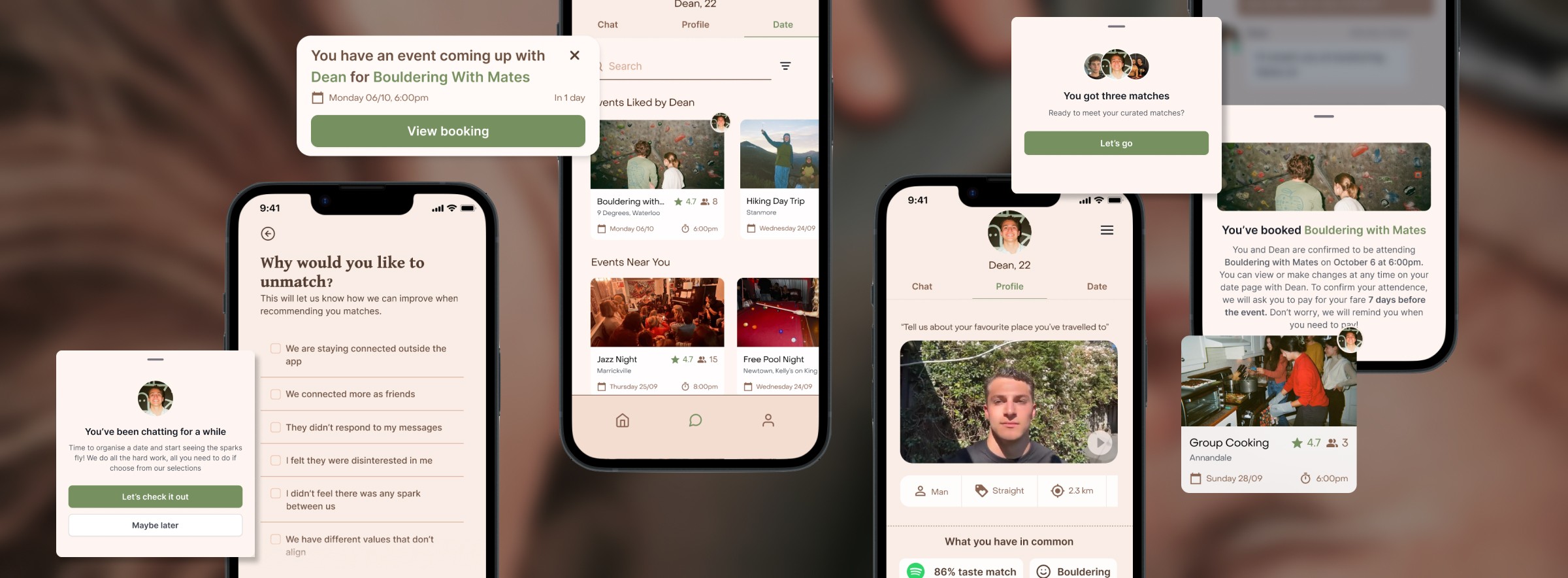
Circl
Uni Project
Role
UX/UI Designer
Researcher
Timeline
June - November 2025
Team
Jessica Lee (Myself)
Emily Arens
Yasmine Harvey
Kirita Geeves
Skills
Research and Development, HCI Design, Prototyping, User testing, Visual Design
Tools

It is within our human nature to desire connection with the people around us. Maslow's Hierarchy states that if sufficient human connection is not actualised, the individual will suffer greatly, likely leading to loneliness and depression (Ryan and Deci, 2013).
I found myself perplexed by the fact that despite the psychological desire to seek out close relationships, it is so difficult, and arguably, more so now than ever before.
That's where Circl intervenes.
Project Overview
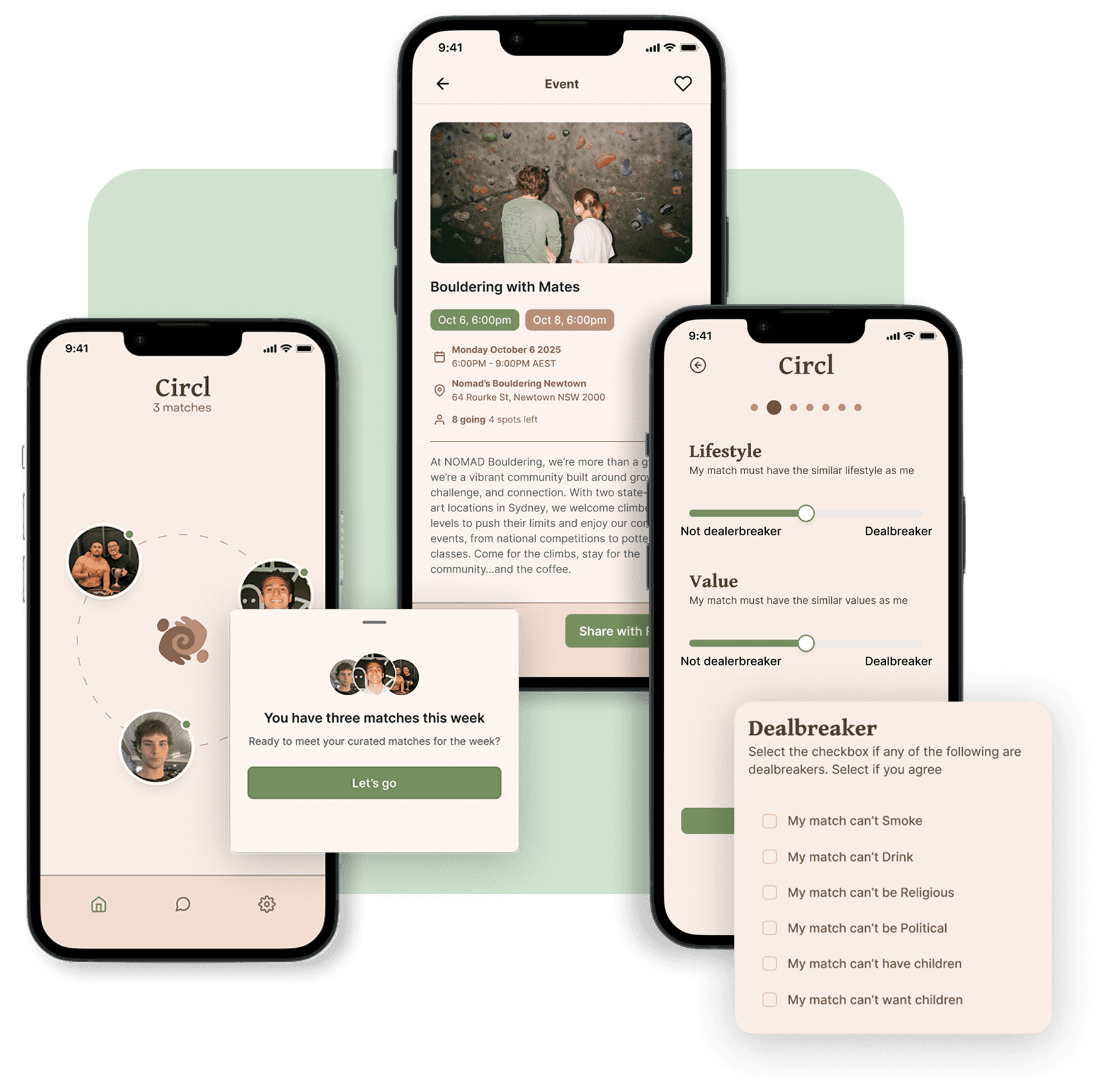
The desire for human connection in the era of digital communication, brings light to Circl, a revised dating app designed to break the toxic cycle of rejection.
This project shows the journey underwent to explore a complex and systemic problem, and harness the tools of UI to propose a solution.
Things I learned
Compromise isn't always the answer
Effective teamwork isn’t about agreeing, it’s about centralising the end-goal, backing your ideas with research and pushing when it matters
You can't solve everything at once
Early roadblocks taught us that an unfocused problem space leads to unfocused solutions. Continual testing and knowing when to pivot was key to designing under a time crunch
Process
1
Research
2
Ideation
3
Challenging assumptions
4
Prototyping
5
Concept Testing
6
Analysis and evaluation
7
Iterations
8
UI testing
9
Iterations
Problem Space
Online dating has made connection more accessible than ever, but it’s also reshaped the dating scene in ways that can perpetuate antisocial behaviour and gendered resentment.

92.5% of people think that the current dating scene is more difficult than ever.
48% of people struggle to initiate relationships.

13% of people report being involuntarily single.
Problem Statement
Men outnumber women 3:1 on dating apps with male match rates averaging at 3%, transforming dating into a commodified marketplace of swipes and profiles.
This highly competitive system subjects users to repeated cycles of rejection leading to resentment pushing people further into online communities, deepening division rather than fostering mutual understanding and authentic connections.
Is this something we can fix?
Challenge
With such a deeply nuanced problem space, tackling the emotional impact of rejection cycles, and gendered-based aggression brought into online dating sites, would require resources we did not have (psychologists, health care professionals etc.).
Solution
Narrowing the problem scope to focus on the dating sites in-particular; What parts of dating sites facilitate/worsen rejection cycles and gendered-based aggression. This is something that is feasible to us.
Solution
Research
Understanding our Problem Space on a deeper level
Our research began with rage-bait and extreme online viewpoints, but the scope quickly became overwhelming. By narrowing in on the rise of incel ideologies, we uncovered their influence on modern dating and a broader pattern of growing gender-based prejudice.
80
analysed data fragments
1
2> hour workshop
5
interviews
Online Ethnography
We looked at Reddit to find the raw and unfiltered discourse behind gendered resentment held as a radical outcome of dating app usage.

r/dating_advice 3 mo. ago
ProfessorRoi
Dating apps for man is dead
30 male. I think I’m tired of it now. No matter how thoughtful I am like bringing flowers or planning and being creative on dates, I’m just shelling money at this point. Ghosted a lot, games being payed, always expected to pay every date which I don’t mind the first few dates. … And when I ask my friends how to talk on dating apps, I’m like when did it become rocket science? I can’t be too interested or she’ll back away. And at the same time show interest or she’ll think I’m not serious. What are these games? Not to mention I feel like I’m interviewing them and I get half assed one to two word answers. Not even asking one thing about me. You know what it’s my fault for being on these apps. Ladies, enlighten me. I’ve heard also horror stories on your side.
DonAj20 6 mo. ago
The depressing reality of dating for modern men.
Data fragment example taken from Reddit
1
Recorded Observation
User shares his frustration with modern dating, feeling that his efforts and generosity go unnoticed
2
Interpretation
Dating app users feel fatigued by lack of success, eroded self worth, and increased feelings of isolation.
3
Underlying Themes
Dating app burnout causing emotional and rejection fatigue
4
Solution Space
Mitigate the gamification of swiping to reduce rejection rates. Encourage face-to-face meetings to occur in a low-pressure environment.
Struggling with empathy
Challenge
Being a team of 4 female designers meant we found it difficult to empathise with the male demographic whose problems lie deep within.
Solution
Understanding begins with listening. We decided to host a workshop with several male participants who have used online dating sites to understand where these behaviours come from.
Workshops
Oftentimes we find that men struggle to open up about personal experiences, particularly within the presence of other men.
The nature of workshops afforded us the opportunity to dig deeper, allowing them to complete probing activities first, and discuss their creations afterward.
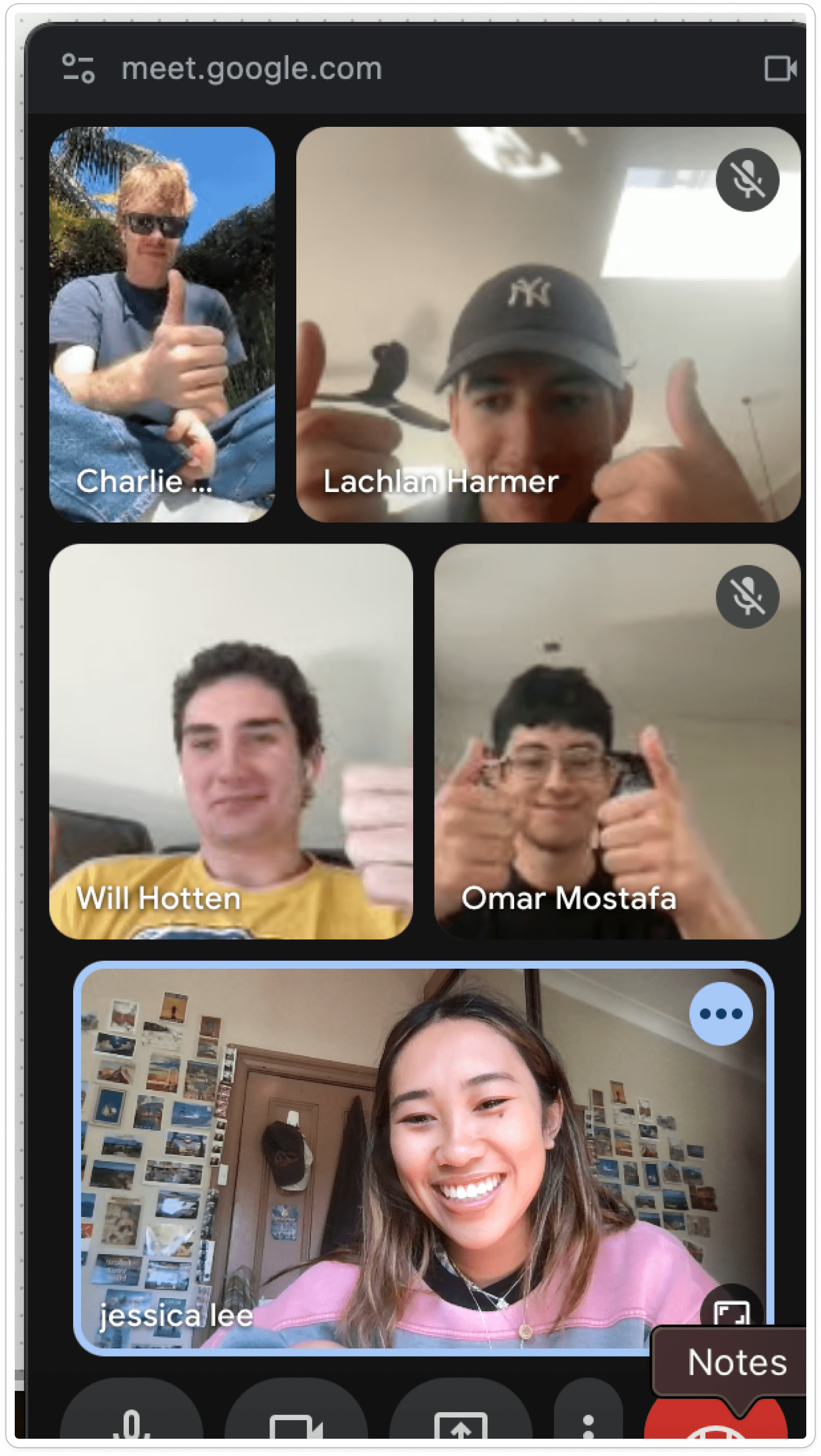
Screenshot of participants from workshop
We discovered 3 key findings from the workshop
More profiles lead to less effort
Other users on the app become 'interchangeable and disposable' with the notion that there are always 'more options', meaning that users are less inclined to put effort in.
[With the] quantity of people in the app, no one really wants you and you’re not worth the time
People are scared of being judged
Our participants felt pressure to conform to the socially accepted norms of 'what gets a match', inhibiting authenticity and genuine connection.
[There are} unspoken rules in how to make your profile … [which] robs the authenticity kind of
Online dating sites feel game-like
Online dating apps feel like games that reward through dopamine rushes when another user 'likes you'. This feeling of validation becomes separated from the intention to date.
The matching aspect is exhilarating, when someone who is attractive likes you and it matches
Interviews
There were two key findings from our interviews:
There are no safeguards to protect people from ghosting or ghosting others
Current dating apps perpetuate ghosting and acts of rejection, which creates harmful cycles with their users.
"When you match with somebody new and it's a cool new person ... you'll chat with them until you match with another person and then it's like, "oh that's now where my attention is" and then like you stop texting that last person"

Dating apps perpetuate gendered-resentment
Fatigue from rejection leads to collective gendered resentment, majorly from men toward women.

“I think girls sometimes treat guys on dating apps as things with no emotions [as a results of their experiences] ... it does suck having to reap those consequences, especially when you are putting yourself out there and actually trying.”
Who are we Designing for?
In analysing and synthesising our research, we had to re-centre the people we're designing for, and we did that with Dean.
What our user needs
Authentic, genuine profiles
Motivation for in-person dates
Reassurance and communication
What our user struggles with
Finding the right person that is aligned with his life pursuits
Fatigue by rejection on online dating sites
Romantic loneliness and low self-worth
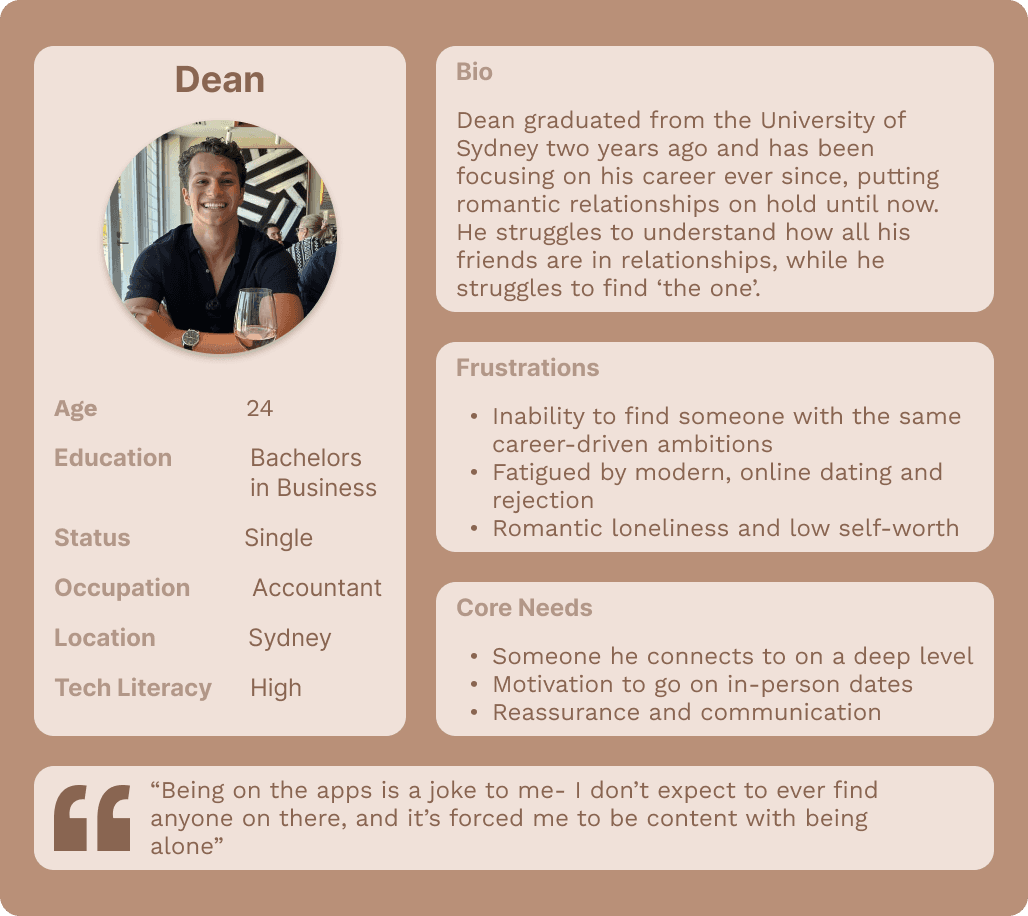
User persona
Final Insights
Using Affinity Diagramming, we condensed our cross-method findings into insights, creating a list of problems that forms the foundation of our design decision-making.
We discovered some emerging patterns.
Human connection above all
Top dating apps have continued to commodify their experience, undermining connection and leading to social dissolution amongst users. These apps keep key features hidden behind pay walls and are dependent on keeping people single and swiping.
How might we design digital dating experiences that prioritise meaningful human connection over commodifcation?
A balanced matchmaking system
With a ratio of 3:1 - men to women, on dating apps, men are left disproportionately exposed to rejection, while women face harassment and decision fatigue. This imbalance pushes both genders towards adversarial narratives; Men perceive women as unattainable or hyperslective, and women perceive men as desperate or entitled.
How might we create more balanced matchmaking systems that reduce cycles of rejection for men while protecting women from overload and harassment?
Guidance for dealing with rejection
People are suffering psychological deterioration from online dating: burnout, anxiety, and lower self-worth are amplified by relentless rejection, superficial interactions, and impersonal practices like ghosting and endless swiping. The current offering of dating platforms don’t just fail to provide connection—they actively undermine it, leaving users emotionally depleted and distrustful of romantic pursuit.
How might we design social and dating experiences that protect self-esteem and foster resilience for young adults navigating rejection and uncertainty in a modern dating environment?
Encouraging real life dates
Gen Z report the lowest levels of satisfaction, success and experience more negativity than other generations, with a sharp decline in Gen Z users active users in the last two years. Their rejection of the apps reflects erosion of trust in digital platforms perceived as superficial, judgmental, and rejection-heavy. Instead, authenticity, shared experience, and in-person bonding are becoming more valuable than the convenience of modern apps.
How might we leverage real-world communities and shared experiences to rebuild trust and enable authentic romantic encounters?
Ideation
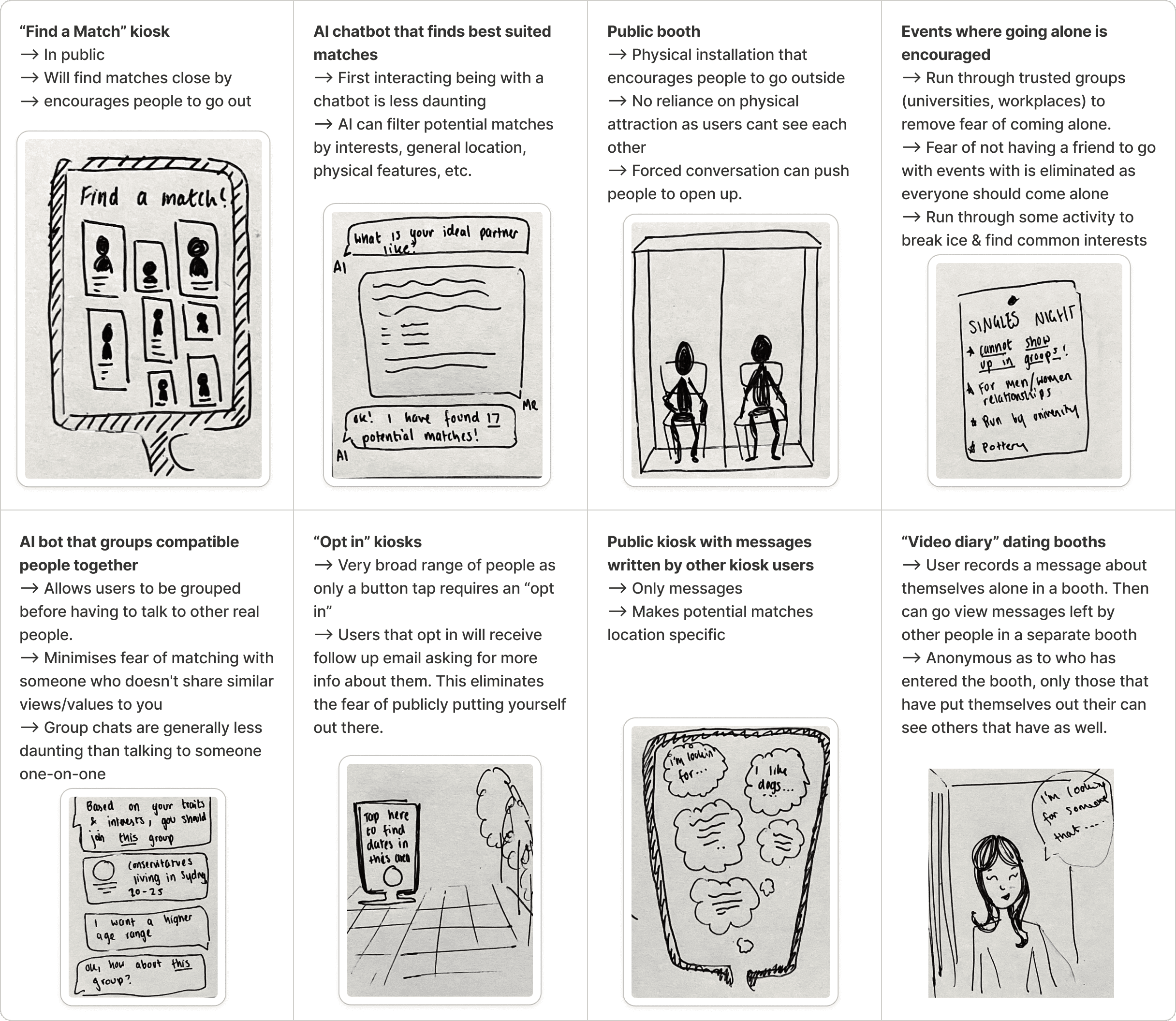
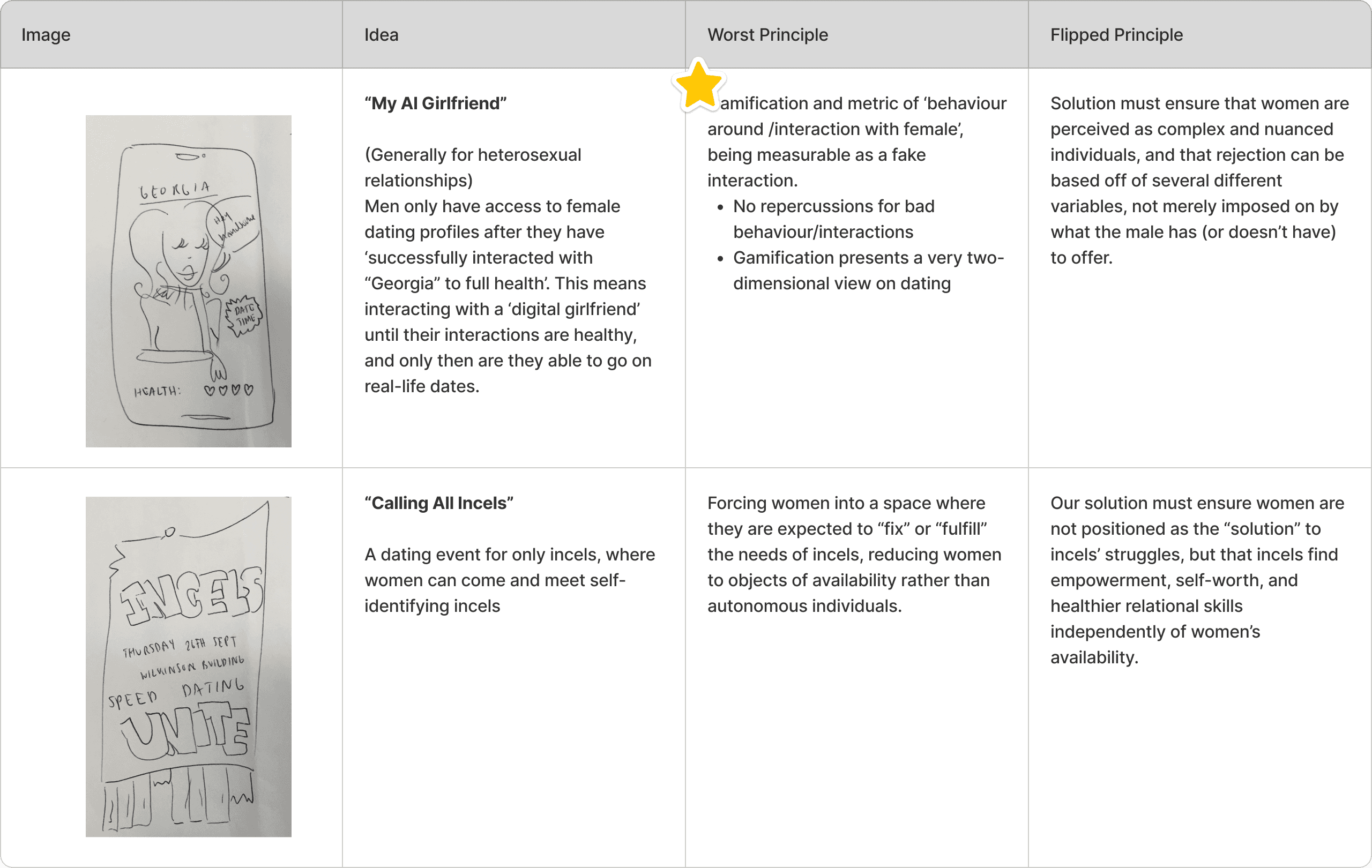
We underwent Body Storming,Crazy 8s and Worst Possible Ideas in our ideation process which allowed us to enter the solution-thinking phase of our process.
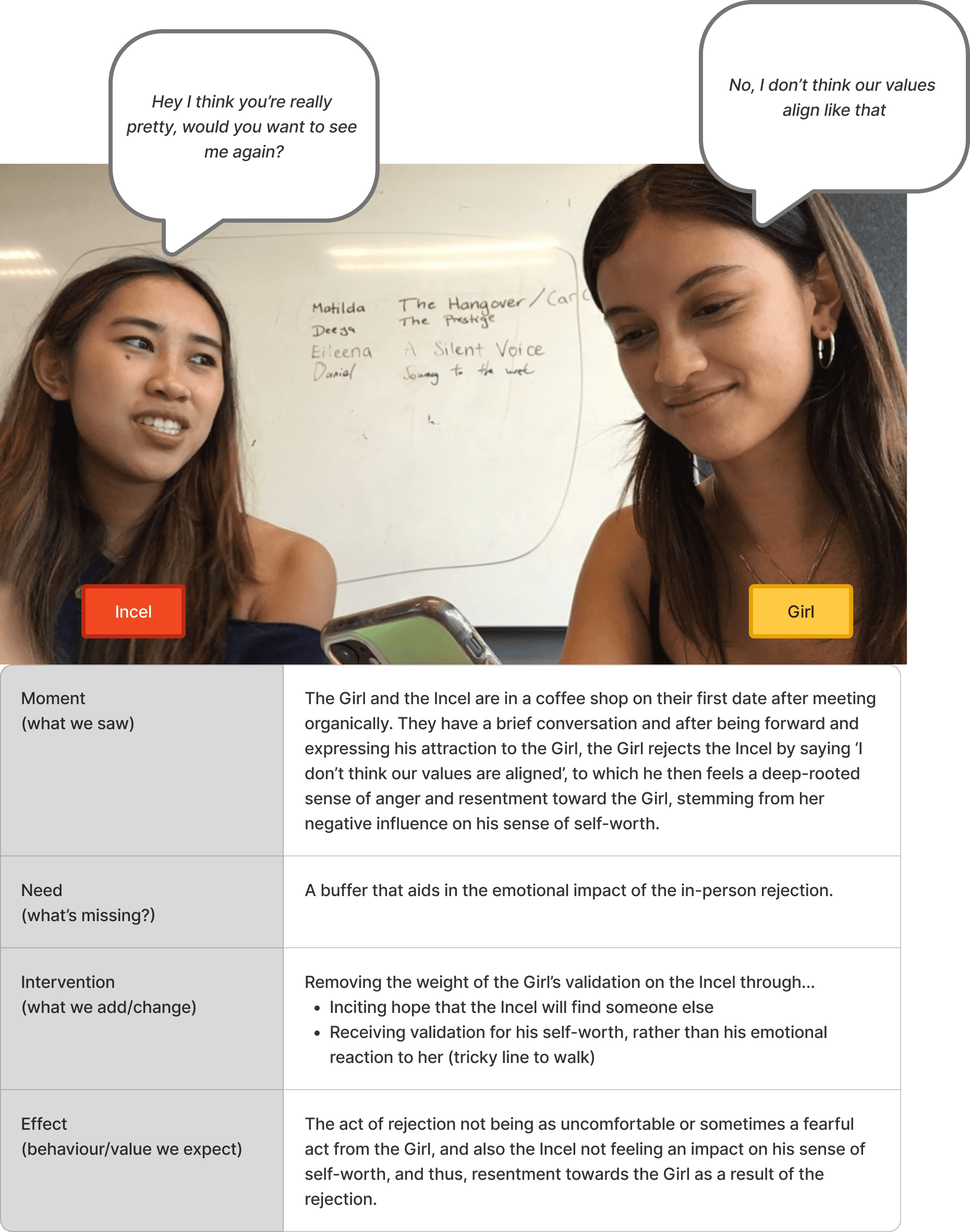
Body Storming
By employing the role of a male and female, we were able to empathise further with these users
We saw that communications can lead to superficial and misunderstood interactions
Crazy 8s
Combined concepts to create more complex, multi-faceted solutions
Worst Possible Ideas
Analysed and identified harmful aspects of the 'Worst Possible Idea'
Through analysis, we understood which principles were most important
Potential Solutions
We created MVPs of our top 3 concepts to communicate with the group.
1
AI Event Matching App
The app works by integrating artificial intelligence to recommend the best suited matches to users based on identity alignment.
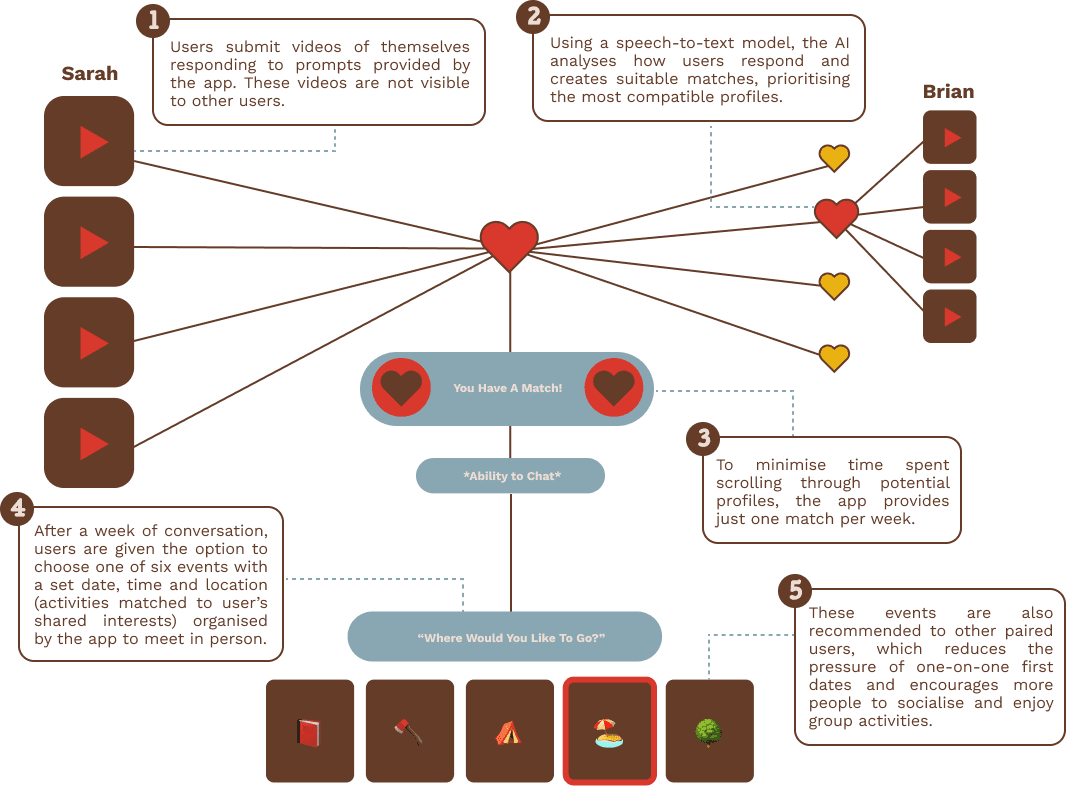
Strengths
User fatigue is mitigated
Pressure of one-on-one interactions removed
Less intimidation showing their personalities
Encourages real life experiences
Weaknesses
High barrier to entry
Frustration with minimal match rate
2
Guided Dating app
Designed for users intimidated by modern dating by 'coaching' them to build social and romantic skills. It also seeks to address extremist/sexist views of modern dating by challenging misinformation.
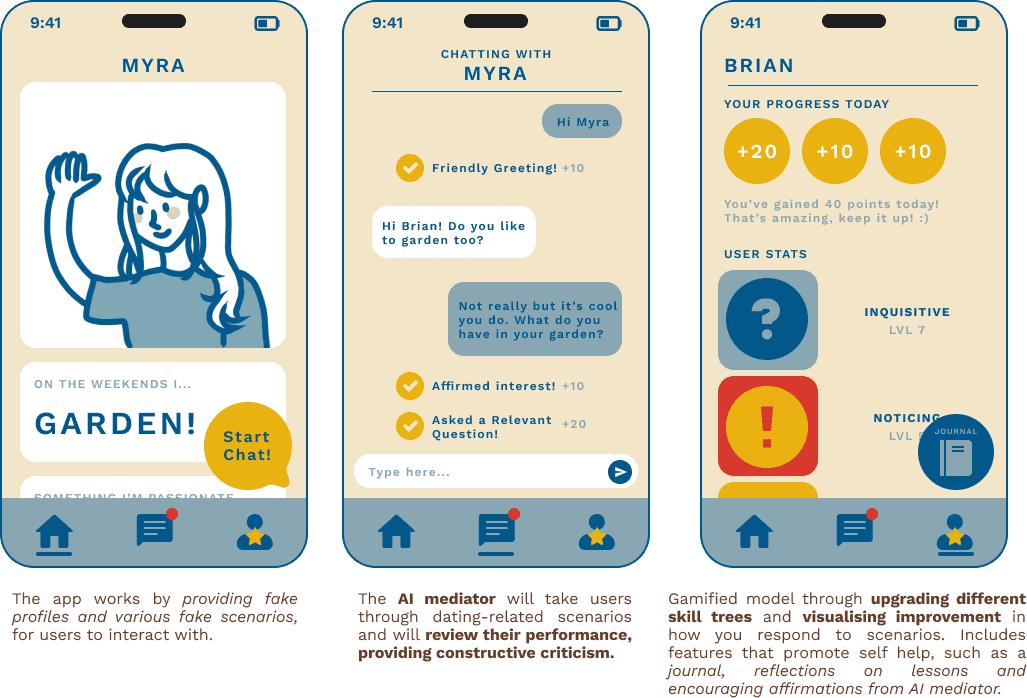
Strengths
Intuitiveness of dating app model makes it accessible to new users
Less intimidating than online dating with real people
Strong focus on re-education approach
Weaknesses
Potentially too reliant on AI, and could serve as a gateway to AI dependant companionship
Minimal focus on facilitating real life meet-ups
Gamification aspect could reinforce negative ideologies
3
Conversation Kiosk
A physical structure located in public spaces, where people can participate in casual conversations and activities through prompts offered by the kiosk, facilitating conversation and playful discussion.
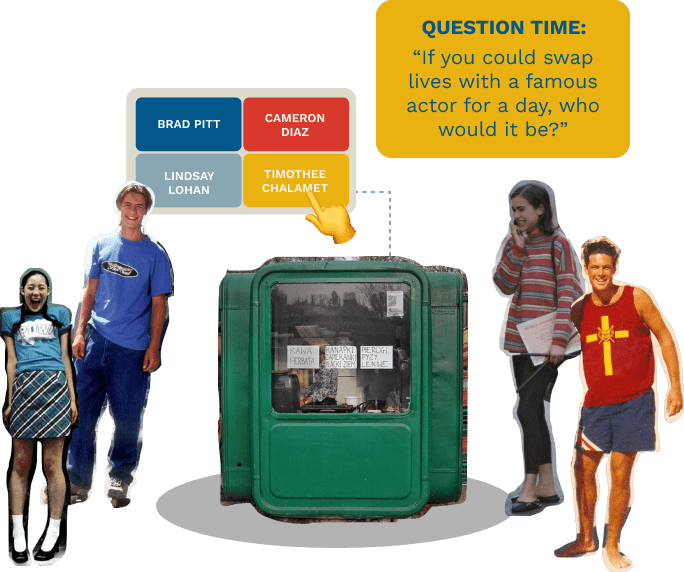
Concept image of 'Conversation Kiosk'
Strengths
Strong accessibility for any user
Expresses personalities without romantic expectation
Weaknesses
Lacks focus on impact of dating sites
Solution exists only in a physical setting, limiting digital accessibility.
Can be intimidating for less sociable people
How Did We Decide?
We constructed a decision matrix to guide our decision to move forward
Decision Matrix Criteria
Connection to Brief
How well does the concept adhere to the scope and requirements of interaction design?
Alignment with the Interaction Design Scope
1
5
Alignment with transition
1
5
Alignment with target demographic
1
5
Insights
How well does the concept address our insights?
Addresses or healing loneliness
1
5
Connecting users over commodifying them
1
5
Rebuilds trust through authentic encounters
1
5
Addresses Gendered Imbalances
1
5
Supports young adult’s mental health
1
5
Other Important Criteria
Novelty or Uniqueness
1
5
Merges digital/physical interactions and connection
1
5
Low ethical concerns or risks
1
5
Feasibility of idea
1
5
Desirability from team
1
5
Engagement for showcase
1
5
1
AI Event Matching App
Decision Matrix Score:
65
2
Guided Dating App
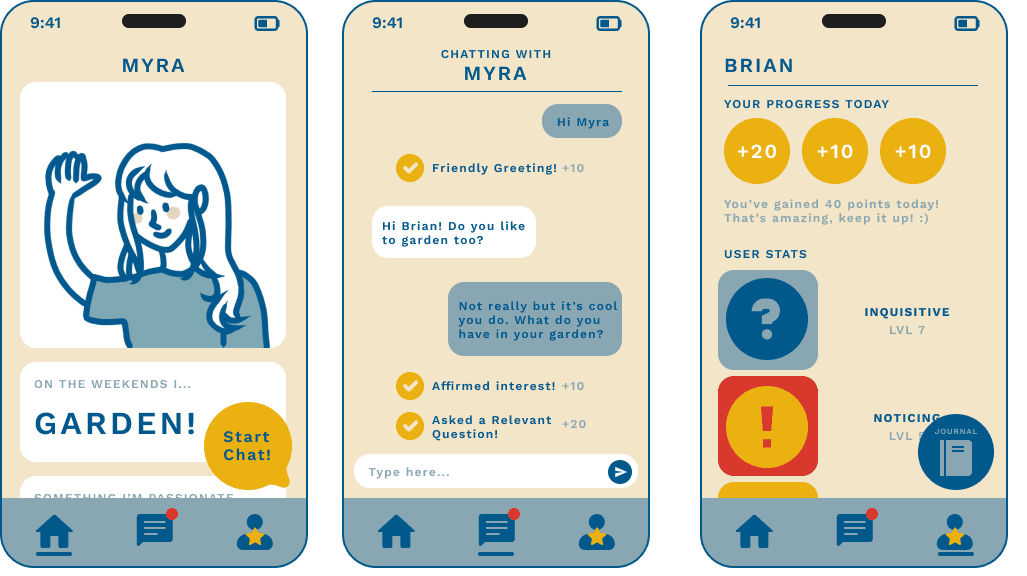
Decision Matrix Score:
51
3
Conversation Kiosk
Decision Matrix Score:
60
Concept Development
Going forward with the AI Event Matching App concept, we developed a revised dating app ‘Circl’ - aiming to redefine digital connection through harnessing slow interactions, real-life meet ups and breaking down harmful cycles of rejection.
The app proposes 3 key points of differentiation:
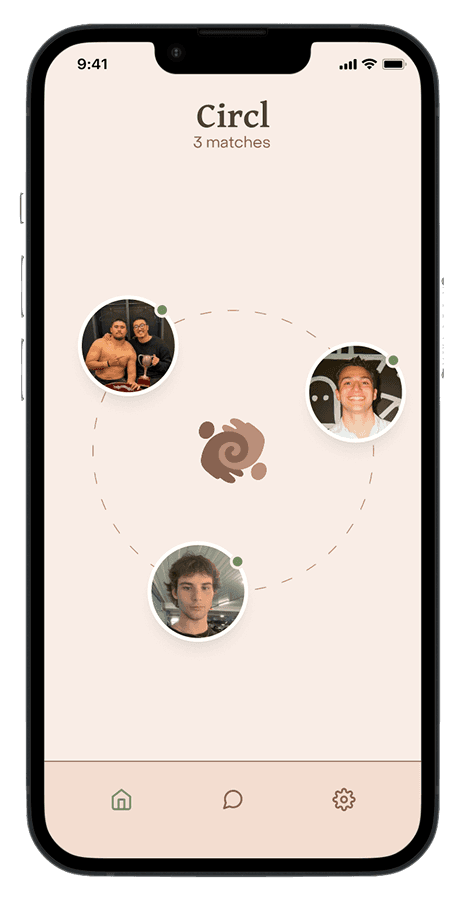
Limited Matches
Each week the user will get up to 3 curated matches, determined through the app’s algorithm.
UX Psychology Applied
Paradox of Choice: By limiting matches, we reduce cognitive load, making each choice feel more manageable
Scarcity Effect: If a user knows they only get 3 chances a week to connect, they are much more likely to look at each profile deeply rather than making a split-second judgment.
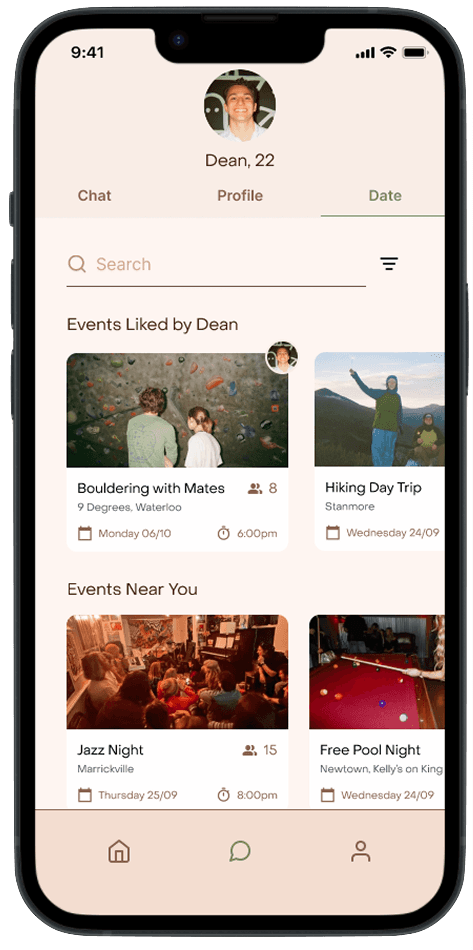
Pre-organised group events
Users can choose to meet their matches in a pre-organised events to make the date fun, natural and low-pressure.
UX Psychology Applied
Low Stakes Interaction: A group activity takes the pressure off 1-on-1 first meetings, encouraging users to participate
Psychological Safety: Meeting a stranger from the internet can carry a perceived risk. Group format reduces perceived risk.
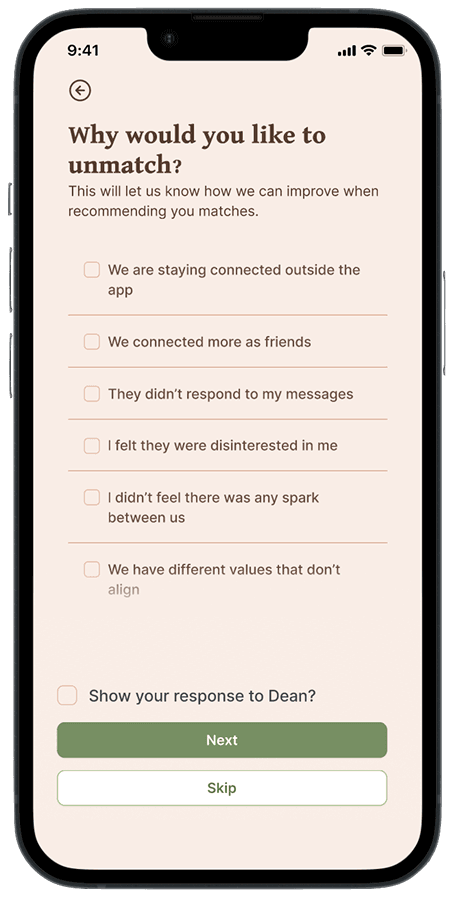
The 'Un-matching' Process
When users want to move on from their matches and receive new ones, they can fill a short form which will send their match an AI assisted message.
UX Psychology Applied
The Zeigarnik Effect: Users cannot receive new matches until they 'finish' communicating with their previous ones, encouraging closure.
Reduced Cognitive Load: Crafting a rejection message uses high emotional labour. Using the form to break it down reduces this mental effort.
User Testing
We tested the effectiveness and desirability of the above 3 concepts, using a UI prototype we developed as a medium to communicate these concepts.
We focused more on our testing protocol than developing the usability of the screens to save as much time and effort, and gain valuable feedback.
Rapid Prototyping
Challenge
Developing a full fledged design system for our prototypes wasn't feasible, and wireframes were not realistic enough.
Solution
We decided to use an existing component system to allow us to rapidly ideate, without jeopardising aesthetic quality to where it impacted our feedback.
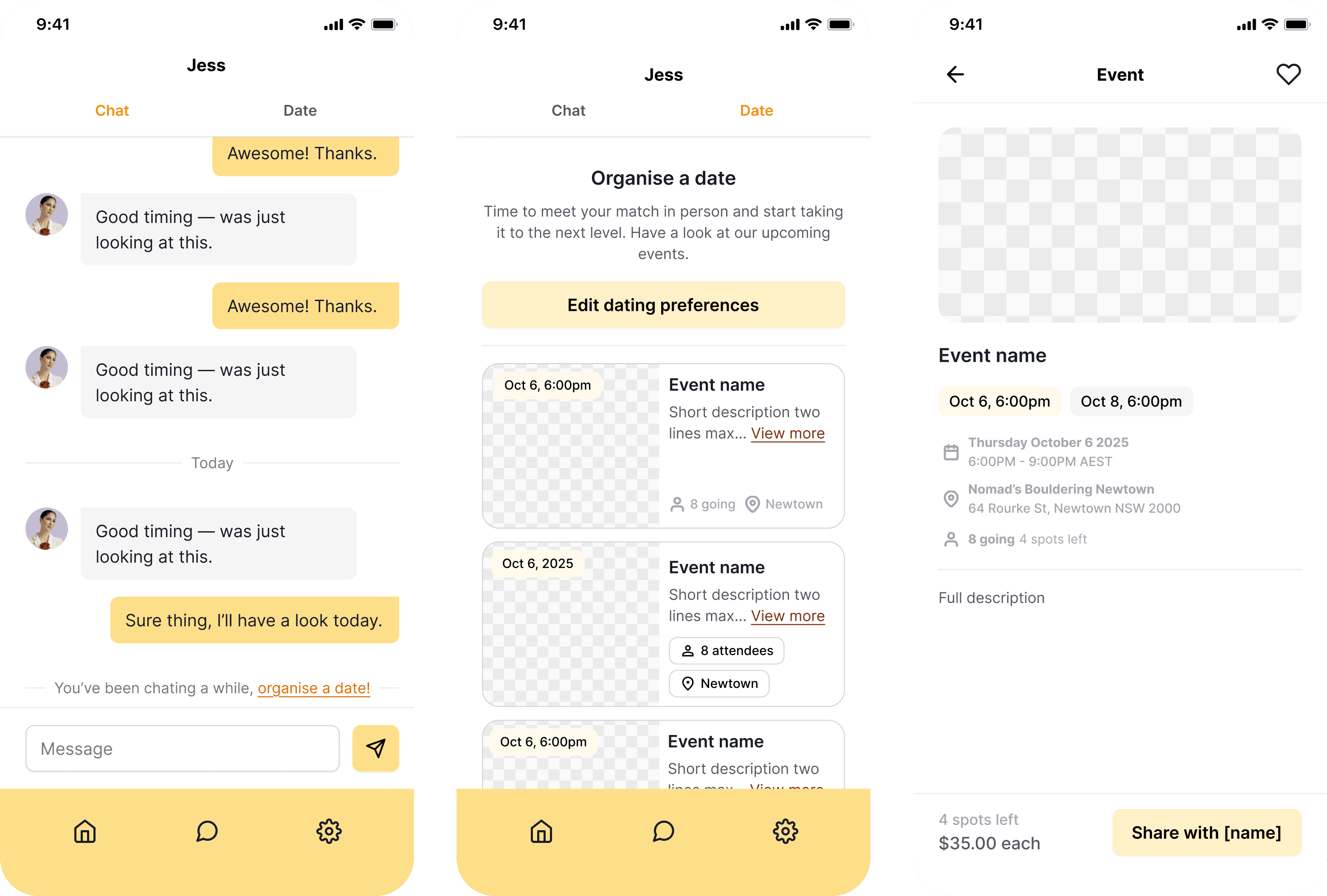
Prototype using existing component system
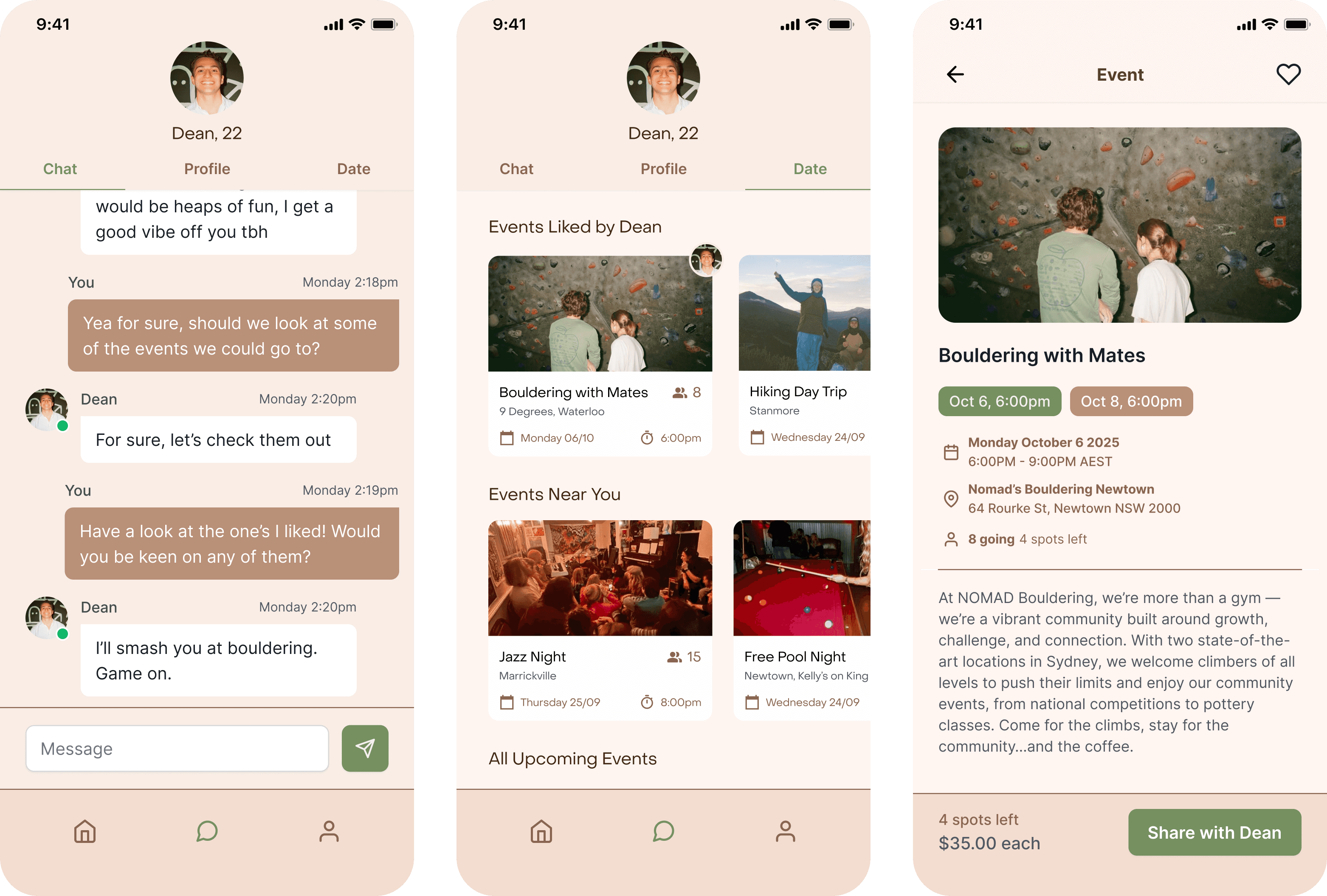
Aesthetic style and imagery added to component system
Testing Protocol
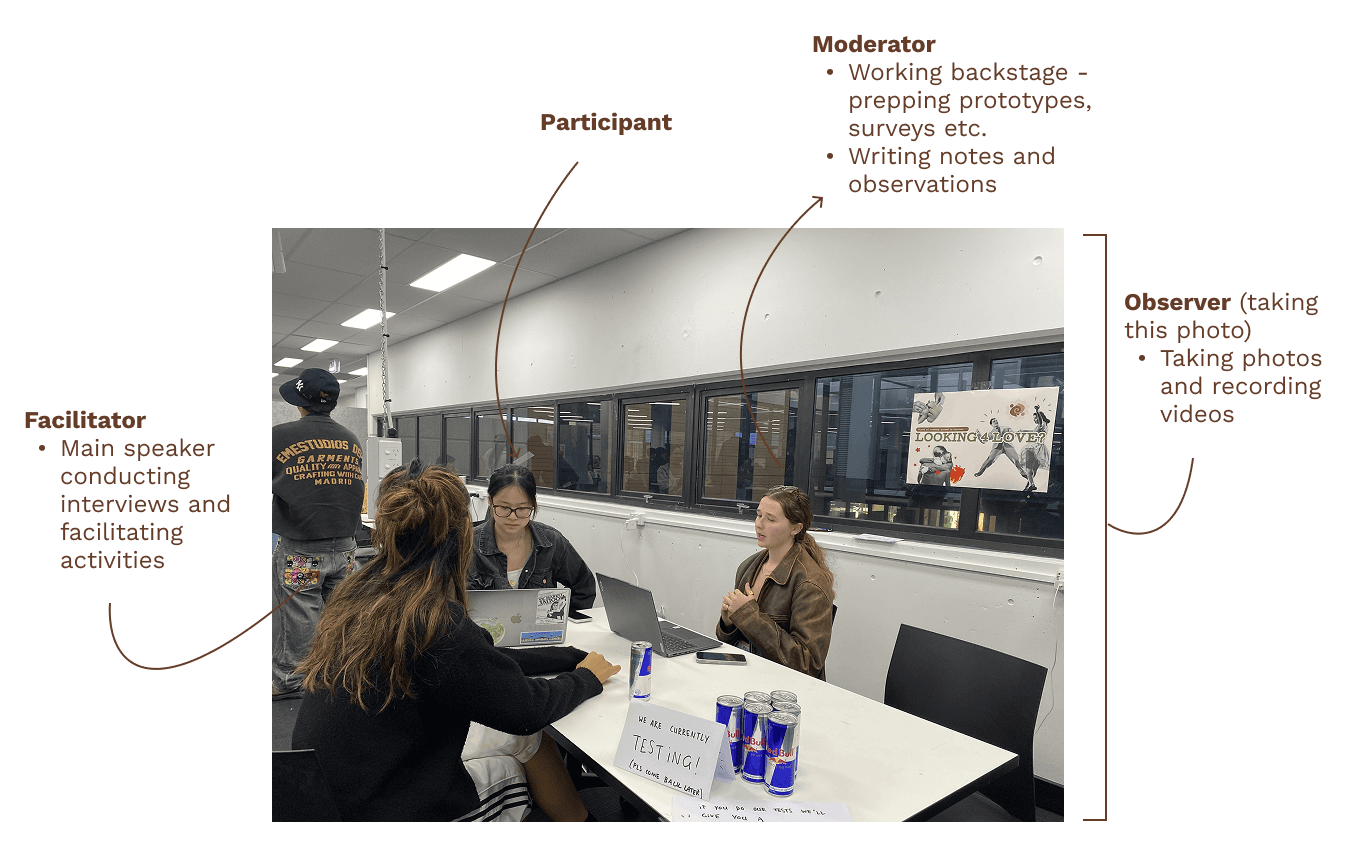
What Are We Trying to Find Out?
How can we best cater to people who are intimidated by modern online dating?
How do we improve peoples' dating experiences better than existing dating apps?
In what way does the 'pre-organised' date feature actually encourage real life meet ups?
How does our concept attract women who have statistically been put off by bad dating experiences?
Different Protocols for Different People
Challenge
Varying experiences with online dating and dating preferences meant we couldn't use a 'one size fits all' measure to our testing protocol.
Solution
We used pre-test user screenings to understand which tasks they should undertake to best suit each of their dating experiences/preferences.
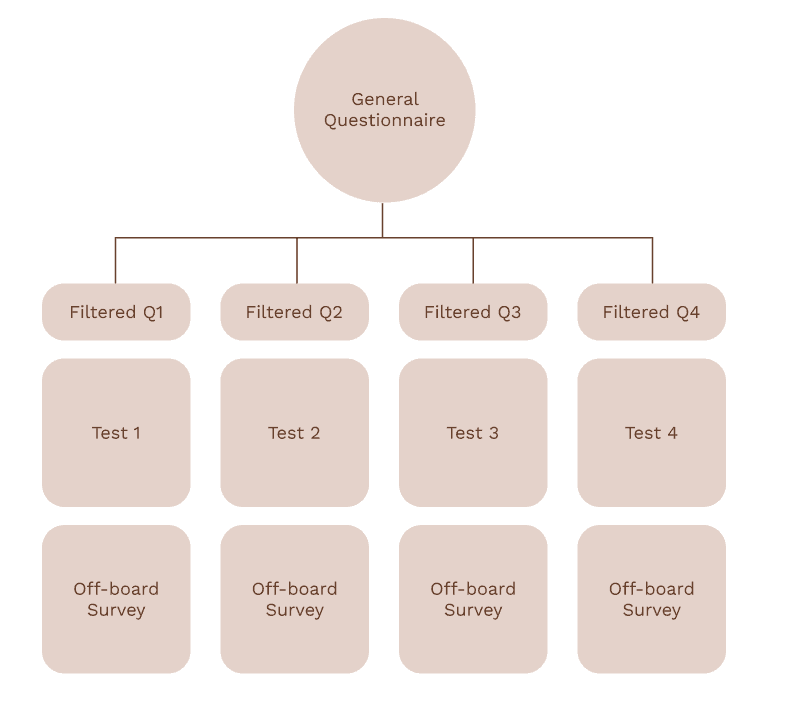
Graph outlining our user-sensitive testing structure
User Testing Structure
Consent Form
Concept Overview
Demographic Screening
Task + Post-task Questions
SUS Survey
Is 3 matches a week too limiting?
Observations
Think Aloud
Post-test Interview
Task: Participants will view the 'Profiles Page' and verbalise their thoughts
User Considerations: We created both male and female profiles and asked users their preference before preparing prototype
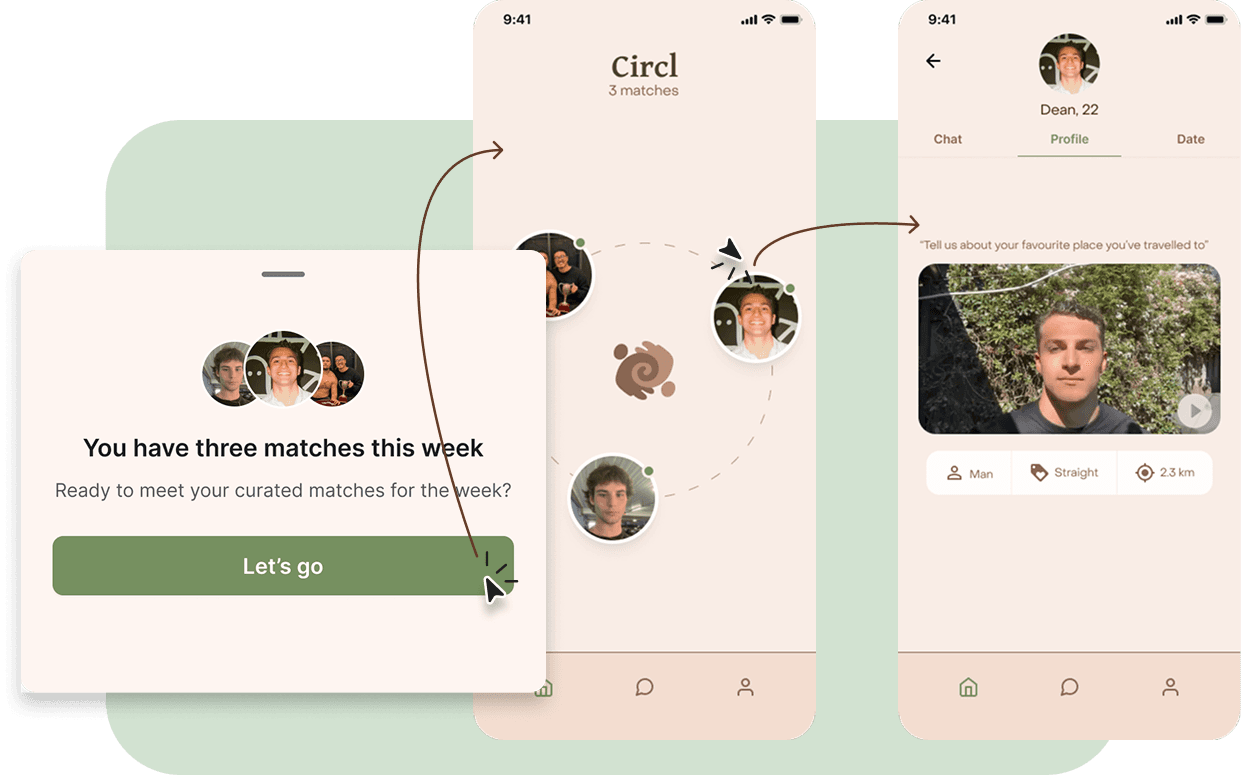
Screens viewed by participants
Are Users Comfortable With Filming Themselves?
Observations
Think Aloud
Post-test Interview
Success Rate
Task: Participants will select a prompt, and record a video for their video profile.
User Considerations: We asked users how comfortable they feel recording themselves on a likert scale of 1-5. If their response was less than 3 we would skip this task.
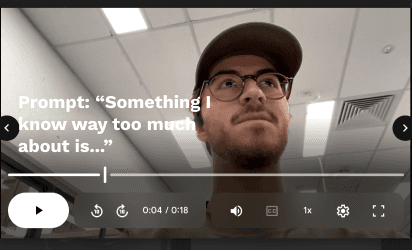
Participant filming themselves responding to the given prompt
How do Users Feel Toward Pre-Organised Date Events?
Observations
Think Aloud
Post-test Interview
Success Rate
Open-ended Questions
Task: Participants select an event to attend to with their 'match' on the app interface
User Considerations: This was one of the only test we were able to conduct with every test user as attitudes toward event based dating were not shaped by past dating experiences.
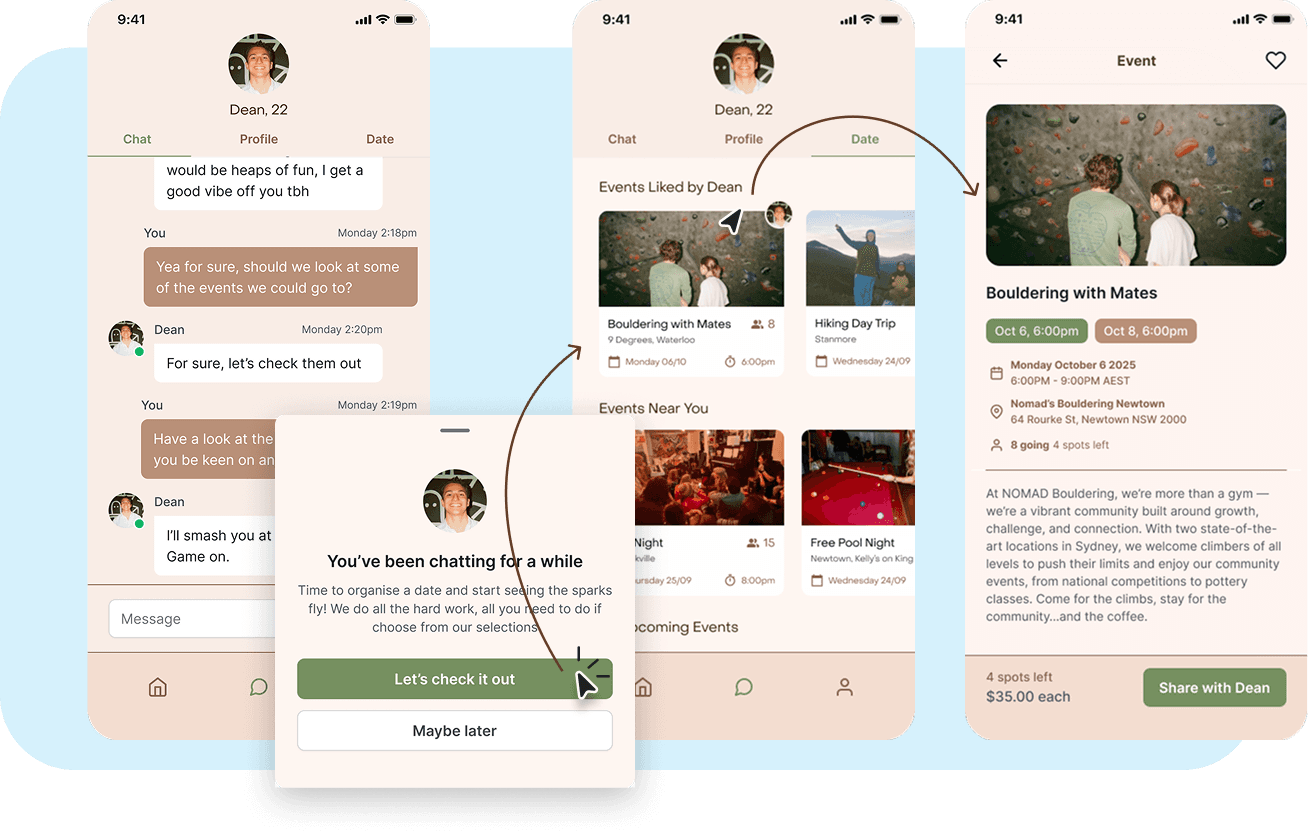
Screens viewed by participants
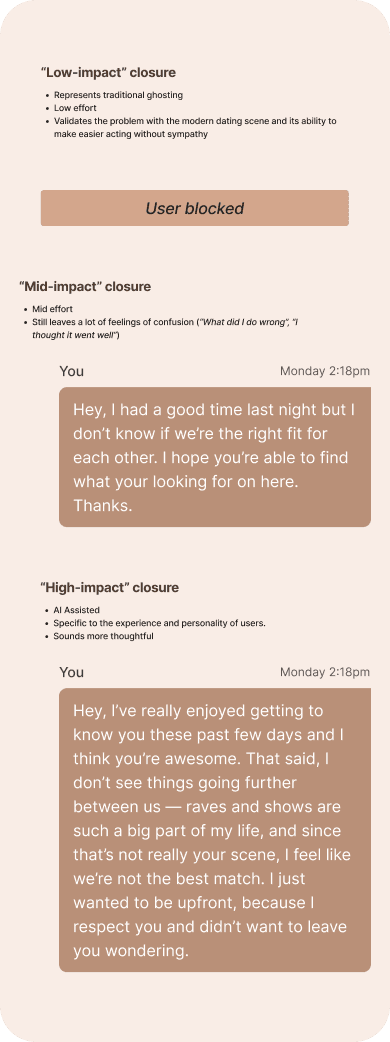
Participant will choose between low to high-impact type of closure message
What's the Best Type of Rejection Message?
Observations
A/B/C Testing
Post-test Interview
Open-ended Questions
Task: The participant will be asked to view a serious of rejection messages from which they will choose which message they think would be the best to send.
Reflections on User Testing
What Went Well?
Good user consideration: User considerations in our testing protocol let us provide the best testing structure for each participant saving time
Timeliness: Most testing session >15 minutes meaning we predicted and managed time well
What Could We Improve On?
Using more sensitive wording: Questioning participants on sexual orientation was more intrusive than useful. Switching to a simple question about which profiles (male or female) was good enough.
Thinking more about edge cases: By only creating male and female profiles, we unintentionally overlooked queer participants. It is important to consider edge cases and design for diversity.
Follow-up questions taking too long: Thinking more critically about clarity and focus of questions will make sure that testing doesn't come at the cost of participant fatigue
86.75
average SUS score
Categorised as an ‘A’ or ‘Excellent’ usability score.
People seemed generally excited about the idea even if the product wasn’t currently applicable to their lives.
What We Found
The following are our most important findings from our user testing, targeting concept over UI.
Users want more control over how many matches they get
Participants liked the idea of receiving curated matches and agreed that three per week “felt intentional” rather than overwhelming. It gave them space to focus on a smaller scale of potential matches. However, some worried about “wasting a week” if a match didn’t work out, or feeling restricted compared to the endless choice in traditional apps. There were two sides with contrasting opinions based on experiences, some wanted less than three and some wanted much more.
We will need to re-evaluate and refine how we can tailor the matching system to best suit the unique interests of individual users. This would include potentially working towards a method where people can customise how many matches they have at once and defining how long it would take to get a new match after completing the ‘un-matching’ process.
People felt self conscious when recording themeselves
Despite the positive response to the video-based dating profiles, when we flipped the script and asked the participant if they themselves would be comfortable recording these kinds of videos, we had mixed results. Users were worried about being judged or “looking cringe”, which affected the authenticity of their video recording. Only 2/10 candidates reported saying yes confidently, whilst most others felt uncertain at first if not denying the activity completely.
Users may need more direct incentive and guidance in order to feel more comfortable to participate themselves.
Group events made connection feel natural but not always romantic
Participants responded positively to the group-date concept, as it alleviates common barriers preventing meaningful connections on online dating platforms and affords them increased convenience. However, some participants expressed uncertainty due to a general preference for one-on-one dates, and felt there may be a less romantic situation with others around.
There must be more options for event preferences, such as variety within group sizes - including options for one-on-one dates organised through the app.
Final Concept Developments
Drawing on feedback from our user testing, we underwent several iterations, the most significant of which are outlined in this section.
Concept development 01
Developing the Matching System
Challenge
Some participants were confused about the matching and curation process, decreasing trust and overall experience.
Solution
We created a back-end flow that undergoes a series of filtration processes to calculate the best matches.
We also prototyped an onboarding process, so that users can understand the what data is inputted for match-curation.
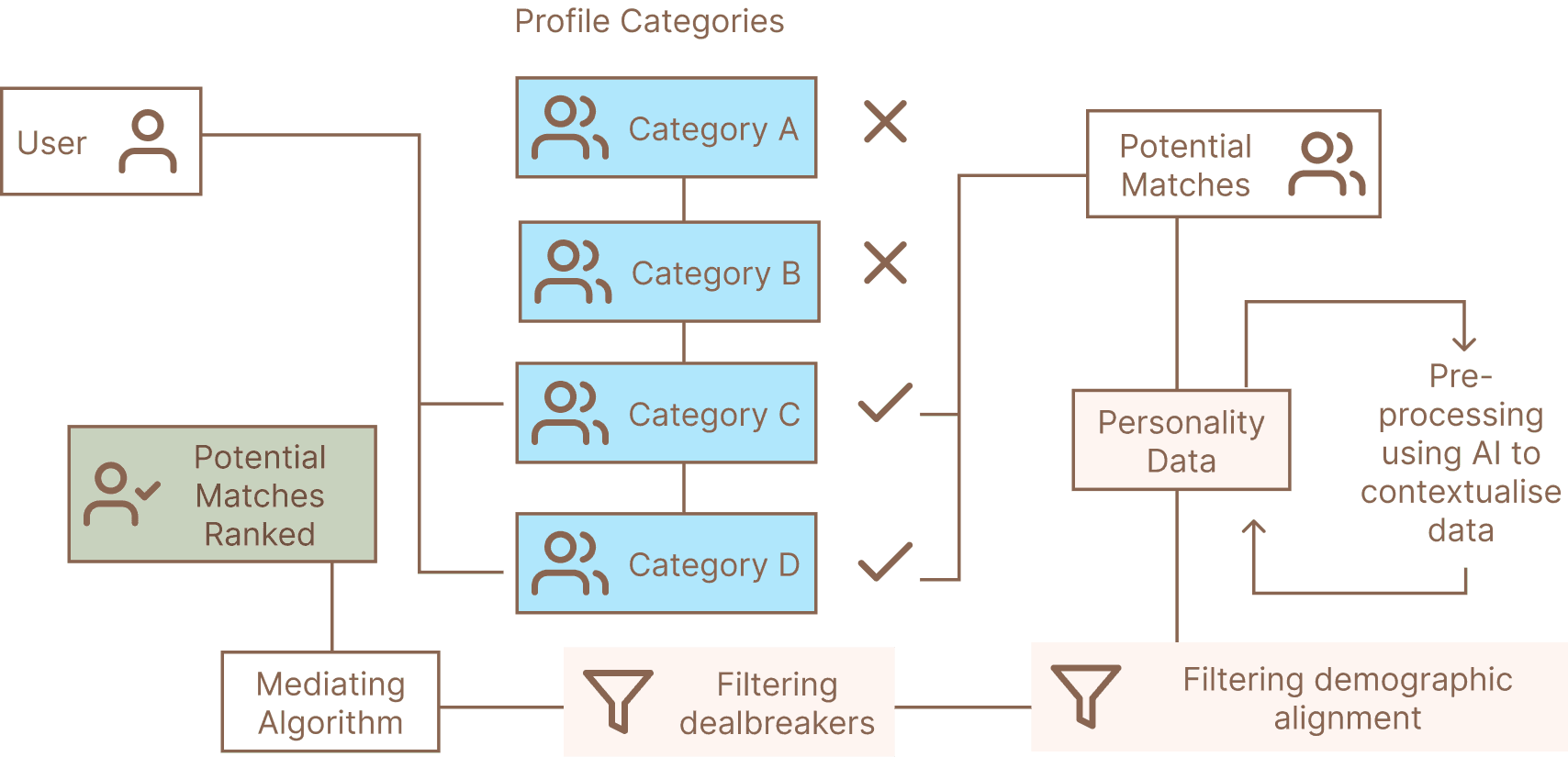
Recommendation System Flow Diagram
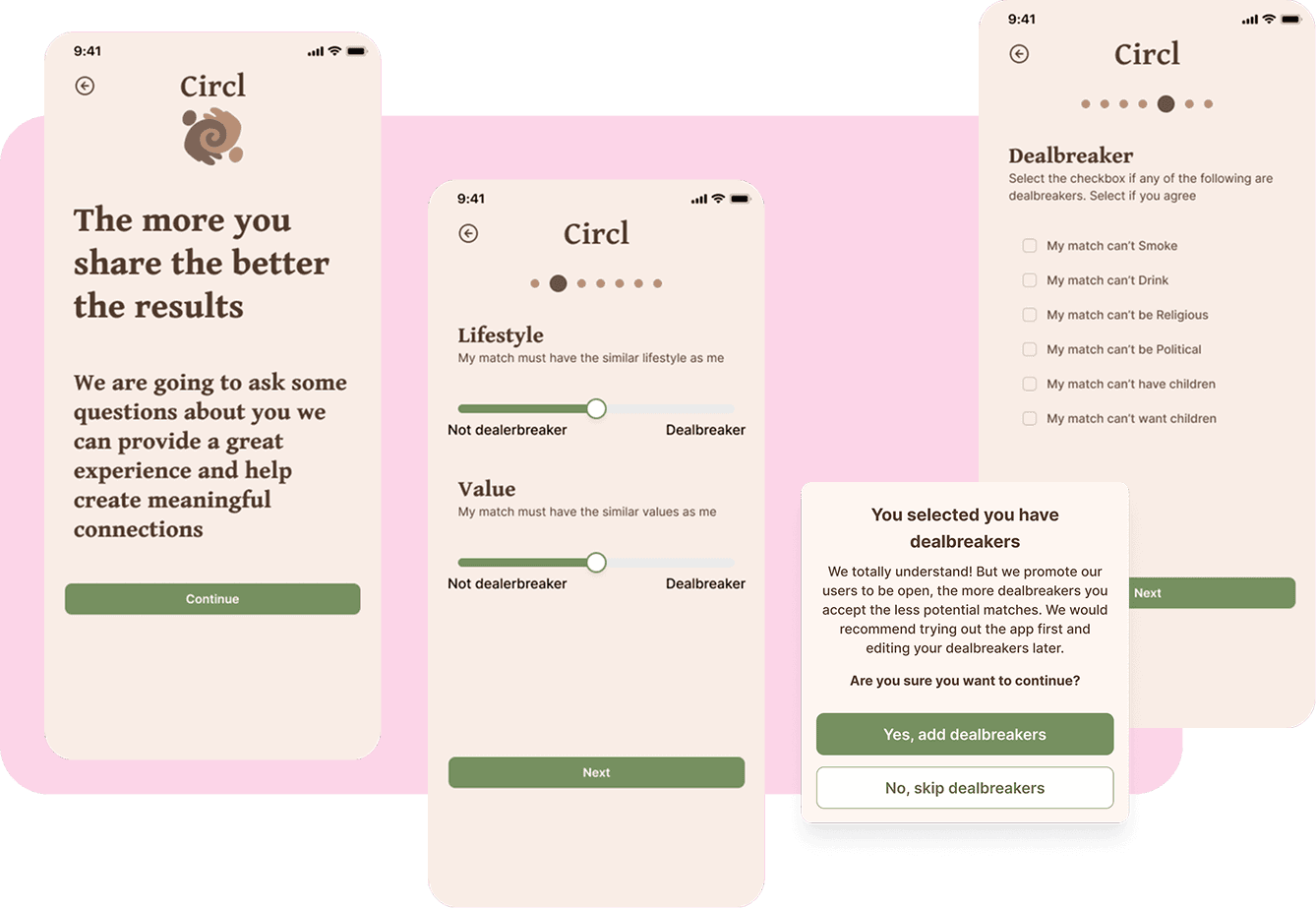
On-boarding screens
Concept development 02
Furthering Connection Through Profiles
Challenge
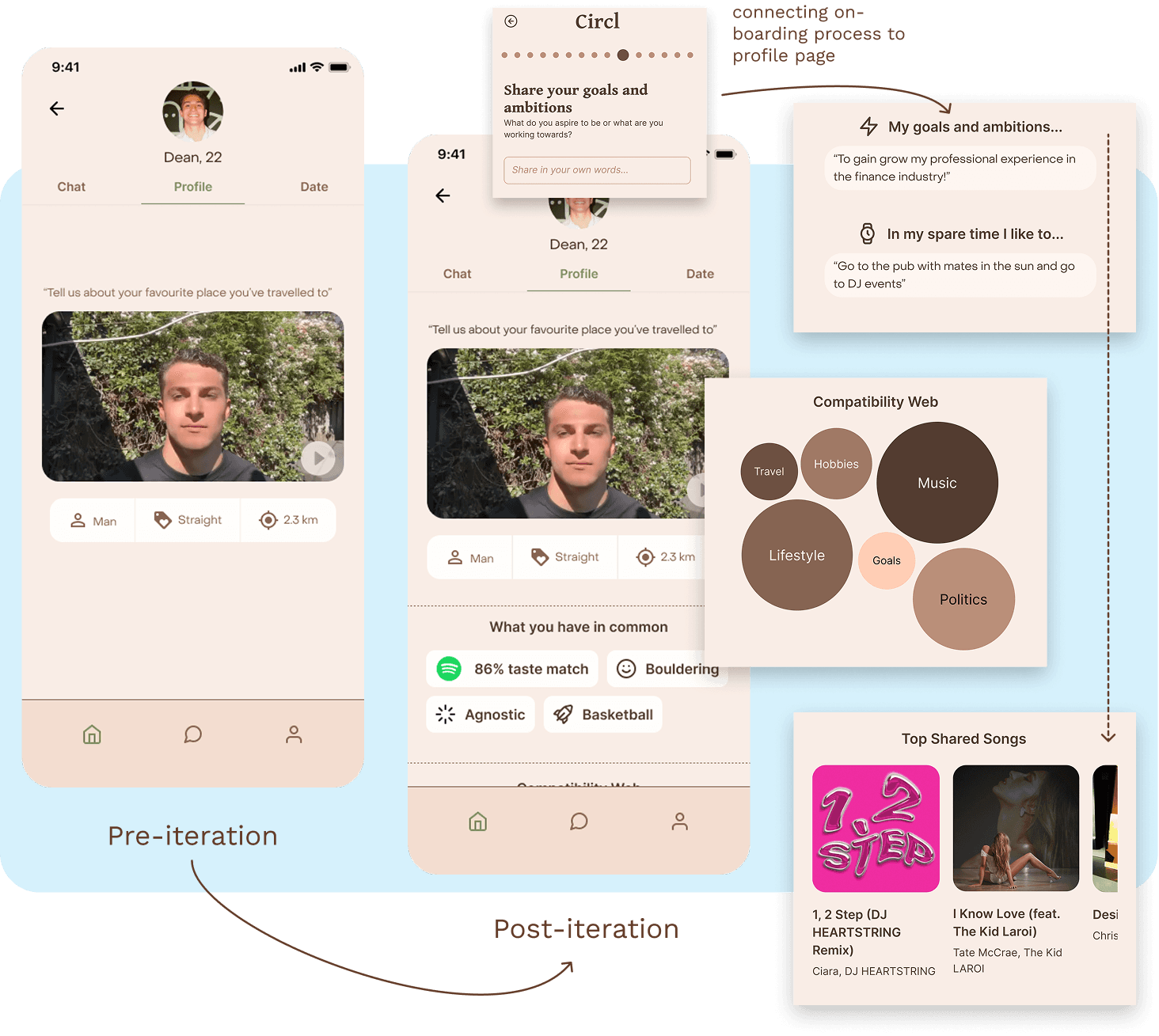
Users found the video-centred profile page ineffective at portraying the persons' full personality.
We need to develop the profile page whilst remaining differentiated from dating apps such as Hinge.
Solution
We used the unique data given during the on-boarding process and displayed it on the users' profile.
This allows consistency and further personalisation.
Concept development 03
Creating Comfortability Pre-recording
Challenge
We found that users felt initially uncomfortable recording themselves due to a fear of social scrutiny, and reluctance to be perceived as 'cringe'.`
Solution
Changing the UI to show examples of video prompts will make provide them with guidance and lessen cognitive effort.
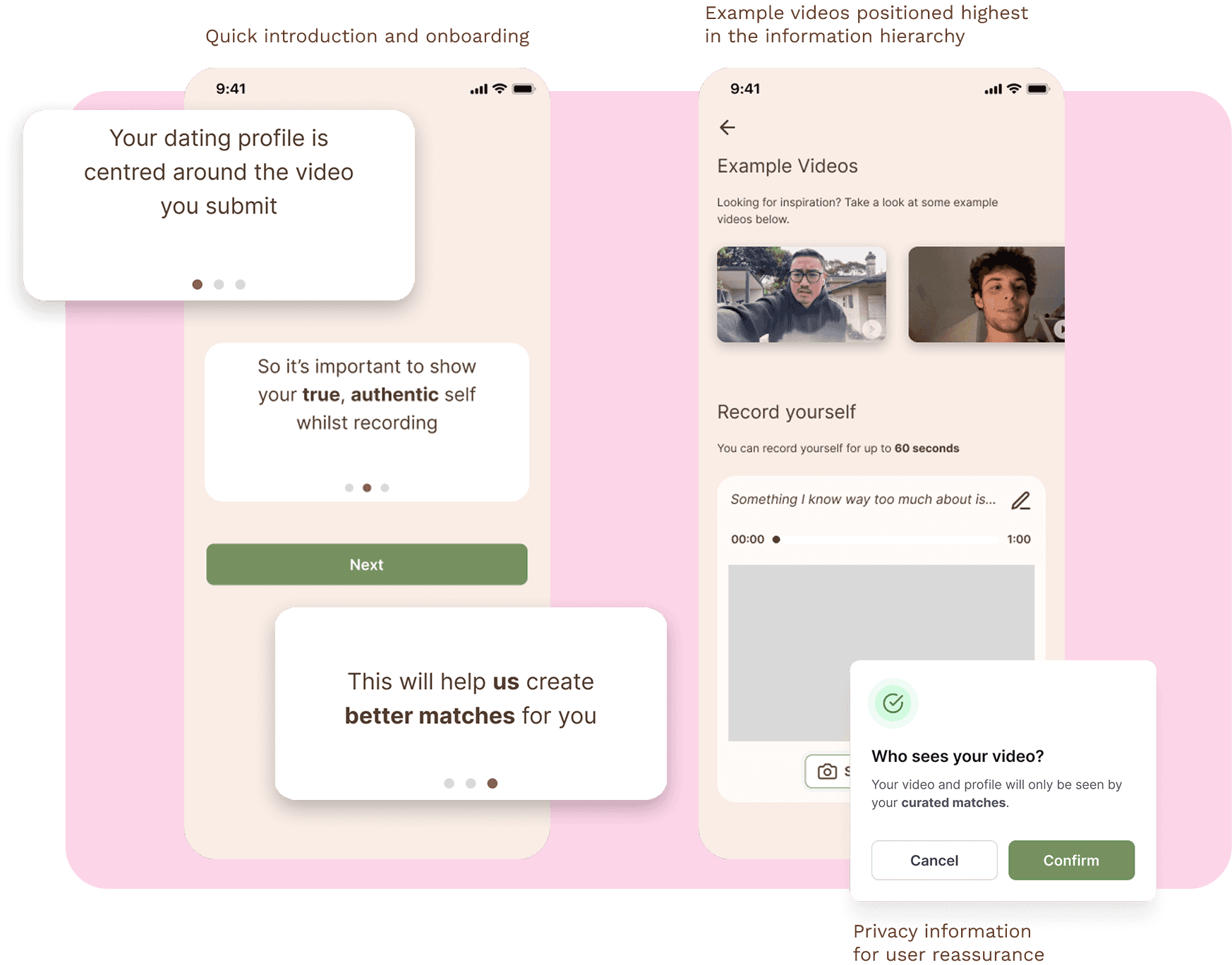
Concept development 04
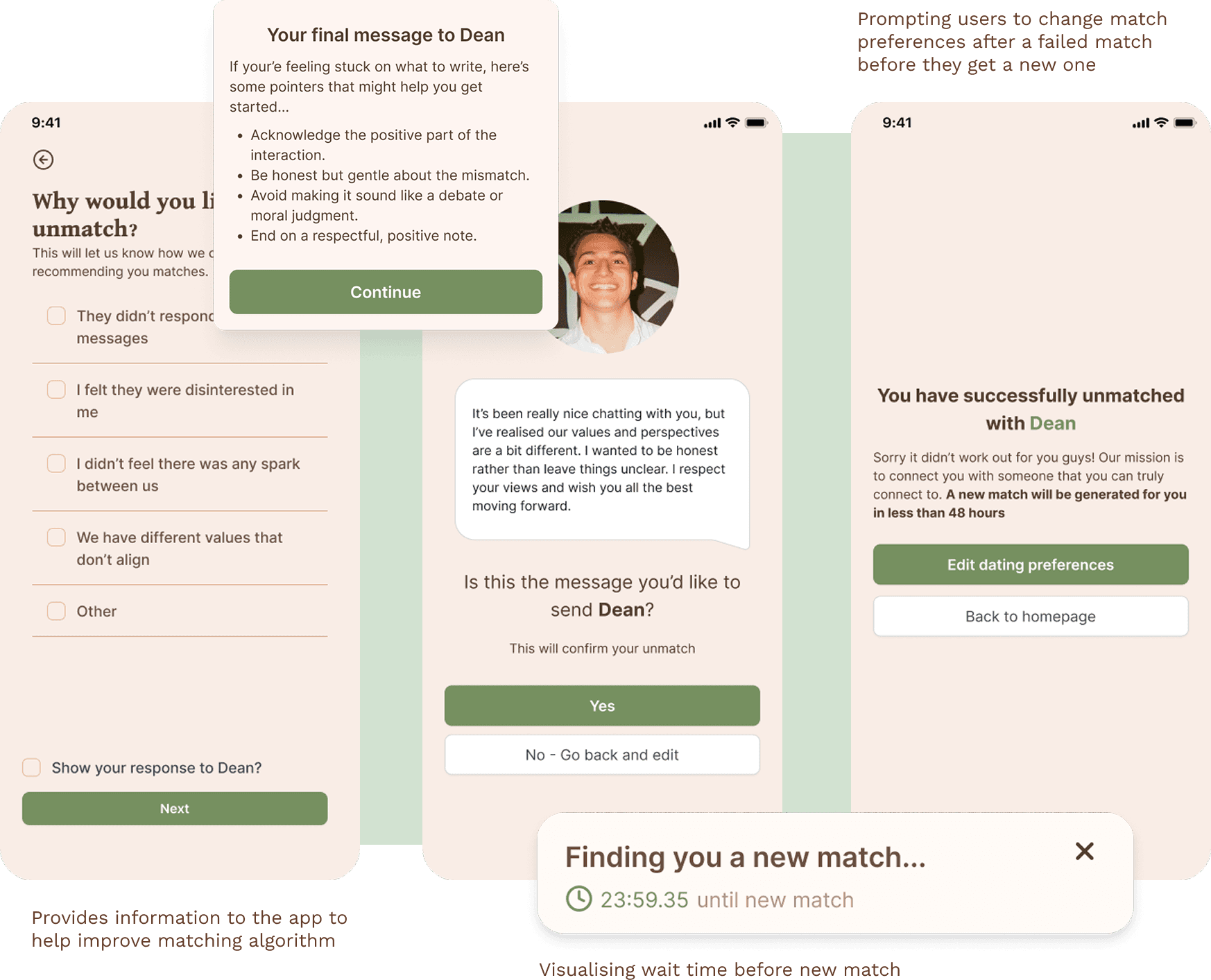
Refining the 'Rejection Message' Process
Challenge
We found the use of AI rejection texts undermined the core focus of Circl in promoting a sense of genuineness.
We needed to rework the solution and test it again with users.
Solution
Instead of the the app providing the rejection message, it will help guide and prompt users to write their own.
Optionally, users can fill-out the rejection message form and edit an AI filled message.
Concept development 05
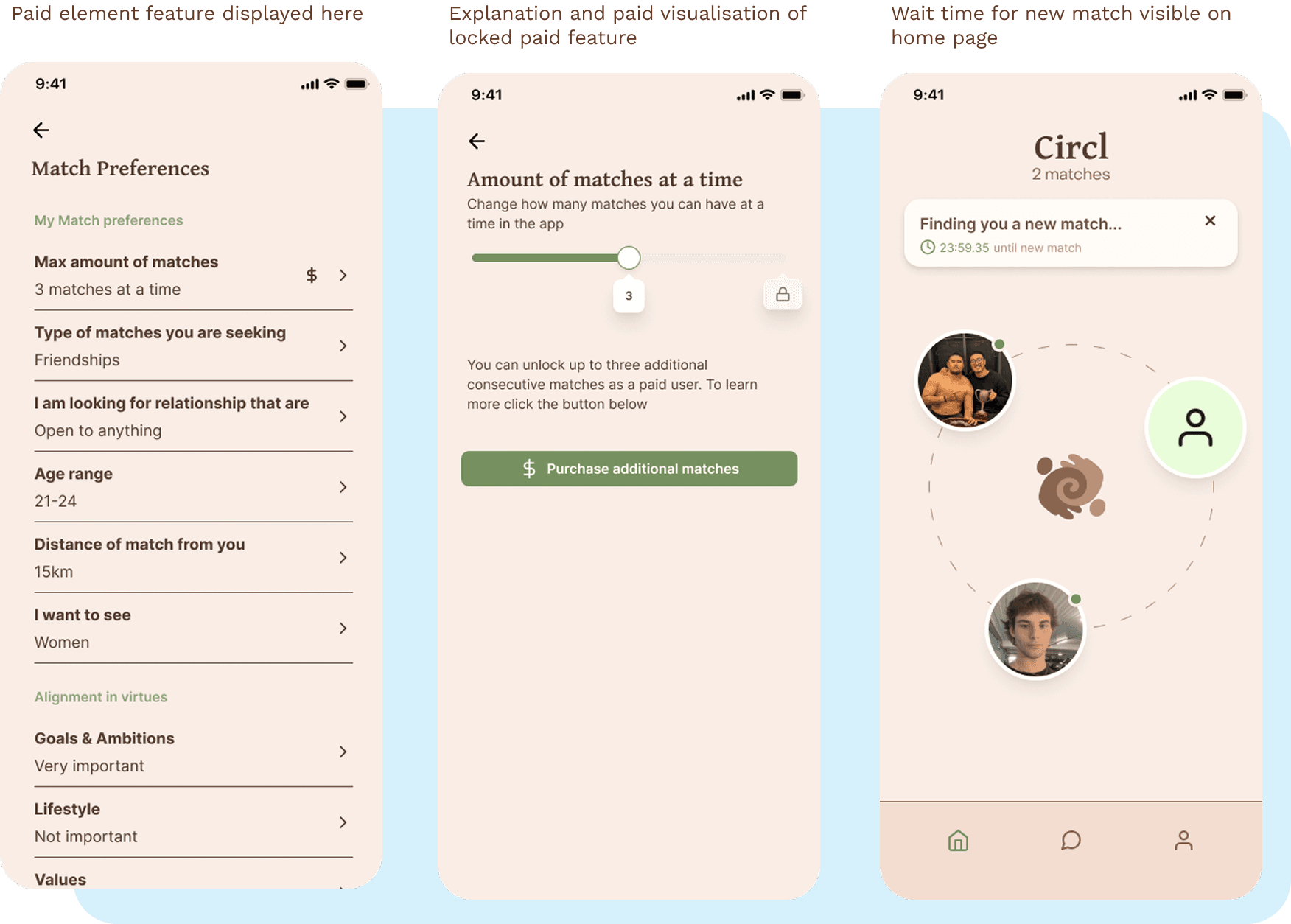
Giving Control to The User
Challenge
Users felt that three matches was too much or too little and lacked flexibility.
The wait time for users to receive a new match made them feel like they were wasting time.
Solution
Allowing user control over quantity of matches received, with an option to pay to increase match maximum to 6.
We didn't want to write off the user pain point, but we wanted to discourage users to have more than 3.
We changed duration of new matches from 7 days to 48 hours.
Concept development 06
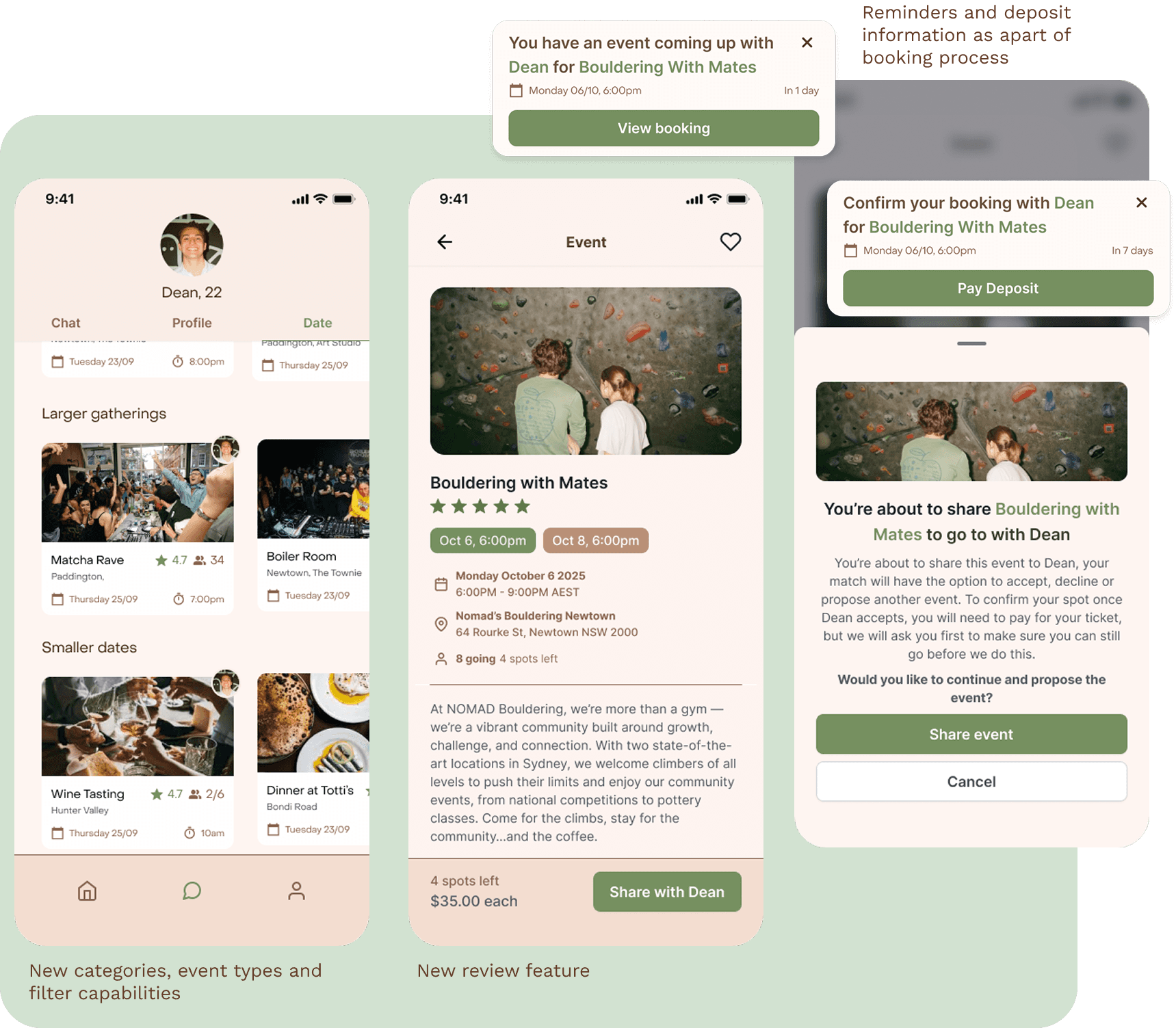
Increasing Flexibility of Pre-organised Dates
Challenge
Users wanted more flexibility with a variety of date options with different ranges of intimacy.
We also found a general fear of in-person ghosting.
Solution
More categories of date types from intimate dates to larger community events.
Users will be required to pay in advance to confirm their booking for paid events to prevent ghosting.
Looking Into The Future
Financial Model
Considering financial viability is complicated. We want to minimise the commodification of our users that to avoid contradicting the initial aims and values of our solution.
Due to our unique product offering, Circl can be funded instead through collaboration and affiliation with event venues
Circl can be compensated for providing a consistent stream of customers to venues
Rollout Plan and Strategy
One of the key limitations across all existing dating apps is the perceived quality of the dating pool. As a new dating app, establishing a strong user base would be difficult.
Intensive Guerrilla marketing strategy using unconventional marketing techniques to promote the differentiation of this dating app
Focus on small, local areas before expanding statewide
Limitations on quantity of matches per user means that Circl require a significantly smaller starting user base compared to traditional dating apps